
Understanding the Muslim Religion on Marriage: Beliefs and Practices
Marriage holds a place in Islam unlike any other human relationship. It is not simply a social contract between two families or a cultural rite of passage. The muslim religion on marriage treats the union between a man and a woman as an act of worship, a sacred covenant that carries spiritual weight and divine purpose. For modern Muslims navigating life in diverse societies, understanding what Islam truly says about marriage - stripped from cultural noise and family pressure - is more important than ever.
Islamic marriage, known as nikah, is simultaneously a binding legal contract, a spiritual commitment, and a path to tranquillity, love, and mercy. Marriage in Islam is intended to be a permanent bond, and many scholars have described it as completing half of one's faith. The Qur'an speaks directly to the soul of this relationship in Surah Ar-Rum 30:21:
"And of His signs is that He created for you from yourselves mates that you may find tranquility in them; and He placed between you affection and mercy. Indeed in that are signs for a people who give thought."
This single ayah shapes the entire Muslim understanding of what a successful marriage should look like - not a transaction, but a source of deep inner peace, emotional warmth, and compassionate partnership. When both husband and wife center their life around these three gifts - sakinah, mawaddah, and rahmah - the marriage becomes a means of drawing closer to Allah.
This article is written from the perspective of a faith-based Muslim matchmaking platform focused on helping practicing Muslims find compatible spouses for a God-centered life. Across the sections below, you will find a thorough exploration of the purpose of marriage in Islam, the marriage process and marriage contract, the roles of financial support and mutual respect between spouses, questions around non Muslim spouses and interfaith unions, and practical guidance on building a good marriage that endures. Whether you are a young man preparing to marry, a Muslim woman seeking clarity on her rights, or married couples looking to strengthen their bond, this guide is for you.
The Purpose of Marriage in Islam (Sakinah, Mawaddah, Rahmah)
The core purpose of marriage in Islam is not reducible to physical desires, social status, or family pressure. It is rooted in three Qur'anic concepts that define the very texture of the marital relationship: sakinah (tranquillity), mawaddah (affection), and rahmah (mercy). These three words from Surah Ar Rum 30:21 form the spiritual architecture of every Islamic marriage, and they distinguish it from a merely legal or cultural arrangement. Marriage provides tranquility for couples - a stabilizing calm that comes not from material wealth but from the presence of someone who shares your values, fears, and hopes before Allah.
Sakinah refers to that deep serenity a spouse finds in the other's company. It is the stillness after a long day, the sense that you are home not because of the building you live in but because of the person beside you. Mawaddah goes further - it is affection expressed through both feeling and action, the tenderness of a kind word, the warmth of a shared laugh. Islam emphasizes love between spouses not as a fleeting emotion but as something cultivated through daily effort and intention. And rahmah - mercy - is what sustains a marriage through hardship, disagreement, and the long stretches of ordinary life. Mercy is a key component of Islamic marriage because it allows spouses to forgive, to extend grace, and to see each other's flaws with compassion rather than contempt.
Marriage is also a sunnah of the Prophet Muhammad ﷺ - not a minor preference, but a central element of his guidance. In Sunan Ibn Majah, he is reported to have said:
"Marriage is part of my sunnah, and whoever does not follow my sunnah has nothing to do with me. Get married, for I will boast of your great numbers before the nations." (Sunan Ibn Majah 1846)
This hadith leaves little ambiguity. Marriage is not something optional or secondary in the life of a Muslim - it is integral to living according to the Prophet's ﷺ example. Islam encourages marriage to protect half of one's religion, and the hadith literature is rich with references to marriage as a shield against loneliness, sin, and spiritual decline.
A key goal of marriage is to build a family and provide a stable environment for raising children. Marriage aims to foster companionship and spiritual growth between spouses, and it is essential for the continuation of humanity across generations. A Muslim man and a Muslim woman who marry with sincere intention are not simply creating a household - they are establishing a unit of worship, a place where children learn prayer and character, where faith is practiced in the mundane details of cooking, cleaning, arguing, and reconciling.
This is why the intention behind seeking a spouse matters so deeply. Rather than approaching marriage as a checklist of physical attraction and family status, Islam encourages human beings to prioritize shared values and spiritual alignment. Platforms like Love InshaAllah exist precisely for this reason - to help practicing Muslims find a spouse with the intention of sakinah, mutual growth in faith, and a life oriented toward Allah's pleasure rather than cultural expectation alone.
The Marriage Process in Islam: From Intention to Nikah
The Islamic marriage process is structured, intentional, and deeply communal. It does not begin at the wedding hall or even at the proposal. It begins in the heart, with a sincere intention to marry for the sake of Allah. The first practical step for many Muslims is du'a - making supplication for a righteous spouse who will be a source of peace and spiritual strength. From there, the marriage process unfolds through several stages: family involvement, halal meeting, proposal (khitbah), agreement on terms, and finally the nikah ceremony itself.
Marriages are traditionally facilitated through families or guardians, and this remains the norm in many parts of the muslim community worldwide. A family member, trusted friend, or community imam might recommend a potential match based on character, religious practice, and compatibility. In modern settings, practicing Muslims also meet through vetted online platforms, community events, or through a Muslim matchmaking program designed to facilitate introductions within an Islamic framework. The key is that the process remains halal - interactions are supervised, intentions are clear, and both parties understand the seriousness of what they are pursuing.
One of the most spiritually significant steps before deciding on a spouse is performing istikhara, the prayer of seeking divine guidance. When a Muslim is genuinely uncertain whether a potential match is right, istikhara provides clarity and reassurance from Allah. If you are unfamiliar with how to perform this prayer, you can find guidance in the article Istikhara Dua in English, which walks through the supplication step by step.
Cultural customs around the marriage process differ widely. In South Asia, elaborate engagement ceremonies and multiple pre-wedding events are common. In the Middle East, the process may be more streamlined, often centered around family negotiations and a formal mahr agreement. In Western countries like the UK and US, young people may meet through university, work, or online services before involving families. Despite these variations, the religious essentials of the marriage process remain the same across the ummah: the proposal and acceptance are necessary elements of marriage in Islam, mutual consent is necessary for a valid Islamic marriage, and the nikah must be witnessed and documented.
A halal pre-marital process includes chaperoned or supervised meetings where both parties discuss expectations, values, and practical matters like finances, career, and children. Avoiding seclusion (khalwah) and intimate contact before the marriage contract is uniformly emphasized in Islamic jurisprudence. This protects both parties and preserves the sanctity of the relationship they are building.
Once the couple and their families agree, the nikah - the formal Islamic marriage ceremony - takes place. This can happen in a masjid, at home, or in any appropriate venue. Nikah ceremonies can be performed at night for comfort, and Islam encourages community involvement in wedding ceremonies. After the nikah, a walimah is a wedding reception hosted by the groom following the marriage, where the marriage celebration is shared with family members, friends, and the broader community. It is a sunnah to announce the marriage publicly and celebrate it with food, joy, and gratitude.
In many countries, Muslims combine the Islamic marriage ceremony with a civil marriage or civil ceremony for legal protection, especially regarding children, property, and divorce. This dual approach ensures that both their religious and legal rights are protected - a topic explored in more detail below.
The Islamic Marriage Contract (Aqd an-Nikah)
In the muslim religion on marriage, the nikah is both a spiritual covenant and a binding legal contract. It is not something taken lightly or entered into casually. The marriage contract is a firm commitment in Islam, creating rights and obligations that both spouses must honor. Islamic marriage contracts create binding marital rights - covering everything from financial support to living arrangements - and they carry weight before Allah as well as within the community.
The essential pillars of the nikah are straightforward. First, there must be an ijab (offer) and qabul (acceptance) - a clear proposal from one party and an unambiguous acceptance from the other, either in person or through an authorized representative (wakil). The bride's guardian, known as the wali or male guardian, plays a role recognized by the majority of muslim scholars across the Hanafi, Shafi'i, Maliki, and Hanbali schools. In most schools, the bride's guardian must be present or represented. The contract also requires at least two witnesses - two trustworthy adult Muslim witnesses who can attest to the validity of the agreement. A marriage contract requires at least two adult witnesses, and without them, the nikah is not considered valid.
The mahr, or dowry, is an obligatory right of the bride. Islamic marriage requires a dowry called mahr, and it can take various forms - cash, gold, jewelry, property, or even a symbolic gift agreed upon by both parties. The amount varies widely by culture: in some communities, the mahr is a modest sum or a copy of the Qur'an, while in others it can reach substantial figures. Islam encourages keeping it reasonable and within the groom's means. A hadith often attributed to Musnad Ahmad states: "The most blessed marriage is the one with the least expenses" - a reminder that the value of a marriage lies in its spiritual foundation, not its price tag.
Beyond the basic pillars, the marriage contract can include additional conditions agreed upon by both parties. For example, a clause might stipulate that the wife has the right to pursue her education or career, that the couple will reside in a particular city, or that the husband agrees not to take a second wife without his first wife's consent. These conditions are valid as long as they do not contradict Shari'ah, and they provide a practical framework for married life that both spouses can refer back to if disagreements arise.
For couples looking for guidance on how to express their commitment and intention at the nikah, the article on Muslim Wedding Vows offers thoughtful examples and wording rooted in Islamic tradition. While formal "vows" in the Christian sense are not a requirement in Islam, many couples choose to share statements of intention that affirm their spiritual purpose.
One critical point for Muslims living in Western countries: a nikah alone may not be recognized by civil courts. Islamic marriage contracts may not be legally binding in non-Muslim countries, which means that without a separate civil registration, a spouse may lack legal protections around inheritance, property, and divorce. This is why understanding the relationship between Islamic marriage and civil marriage is essential.
Civil Marriage and Islamic Marriage: Working Within Modern Legal Systems
The relationship between Islamic law and civil law is one of the most practical - and most overlooked - issues facing Muslim couples today. In many Western countries, including the UK, US, Canada, and Australia, an Islamic nikah is not automatically a civil marriage. The two exist in parallel systems, and understanding both is necessary for full protection of your rights as a married couple.
In England and Wales, for instance, a nikah performed in a mosque does not carry legal weight unless the venue is registered for marriages and the ceremony follows civil marriage requirements. In the UK, civil marriage is recommended for legal recognition of Islamic marriages. Without civil registration, a Muslim woman who separates from her husband may have no legal claim to spousal maintenance, property division, or pension rights under family law - a serious vulnerability that has been highlighted by courts and advocacy groups alike.
The picture is similar across the United States. Each state has its own marriage licensing requirements, and a nikah without a civil marriage license provides no legal standing. The data reflects awareness of this issue: 95% of Muslim American couples had both nikah and civil marriage in 2012, and that figure has held steady through subsequent surveys. This dual approach - performing the nikah in the masjid and registering the civil marriage at a local registry office - ensures that both religious and legal rights are protected.
In Muslim-majority countries, the situation is different. In Saudi Arabia, Pakistan, and Malaysia, the Islamic marriage contract itself is usually the recognized civil document, processed through Islamic family courts. Mahr is enforceable in Islamic family courts in Muslim-majority countries, meaning the bride's financial right is backed by the full force of state law. The nikah document serves as both a religious record and a civil certificate.
For couples navigating these dual systems - especially those with international backgrounds or cross-border family ties - consulting both local scholars and qualified legal professionals is strongly advisable. The goal is to ensure that your Islamic marriage contract and civil marriage complement each other, leaving no gaps in your rights or obligations.
Who Can Marry Whom? Muslim Man, Muslim Woman, and Non Muslim Spouses
The default and most encouraged form of marriage in Islam is between a Muslim man and a Muslim woman who are both committed to their religion and practice. Shared faith creates a foundation of shared values, shared worship, and a common vision for raising children. The Qur'an describes spouses as garments for one another - intimate protectors who cover each other's secrets, shield each other's weaknesses, and provide warmth and comfort. This imagery only reaches its fullest meaning when both spouses are oriented toward the same God and the same way of life.
The classical ruling across all four Sunni madhhabs - Hanafi, Shafi'i, Maliki, and Hanbali - is that Muslim women are not permitted to marry a non Muslim man. This consensus is based on Qur'anic text, hadith, and centuries of scholarly interpretation. The rationale centers on protecting the children's faith and ensuring that the household's spiritual leadership is aligned with Islam. While a minority of modern academics have questioned this ruling, it remains the established position of mainstream Muslim scholars and is not endorsed by most traditional scholarship.
For a Muslim man, the situation has some nuance. Many scholars permit a Muslim man to marry a chaste woman from Ahl al-Kitab - the People of the Book, meaning Jews and Christian women - based on Qur'anic permission. However, this allowance comes with significant practical challenges. Questions about the children's religious upbringing, the celebration of religious holidays, dietary practices, and overall family life can become sources of tension. Increasingly, some contemporary scholars strongly discourage interfaith marriage even for Muslim men in secular contexts, citing the risk to children's faith and family harmony.
The Qur'an addresses the question of marrying outside the faith directly in Surah Al-Baqarah 2:221:
"And do not marry polytheist women until they believe. And a believing slave woman is better than a polytheist, even though she might please you. And do not marry polytheist men [to your women] until they believe. And a believing slave man is better than a polytheist, even though he might please you..."
This verse establishes a clear principle: faith must be the precondition for marriage, even when physical attraction or worldly appeal exists. Prohibited unions include marrying forbidden relatives or certain non-Muslims, and the wisdom behind this is the safeguarding of iman and a shared spiritual direction within the home.
From the perspective of a faith-based matchmaking platform, the focus is on pairing practicing Muslims for spiritually aligned, Islam-centered families. This is not about excluding anyone from compassion or community - it is about being honest that the only religion that can sustain a marriage in its fullest Islamic sense is the one that both spouses share willingly and practice actively. The right person for a Muslim seeking marriage is someone who shares their deen, their values, and their vision for family life.
Rights and Responsibilities: Financial Support, Leadership, and Mutual Kindness
The muslim religion on marriage defines clear roles and rights for both husband and wife, but these roles are always anchored in mutual respect, compassion, and ihsan - the pursuit of excellence in everything. Islam advocates a role-based relationship between husband and wife, not to create hierarchy for its own sake, but to establish clarity, security, and accountability within the family.
The husband's primary obligation is financial support. A husband must provide financial support to his wife - including housing, food, clothing, and medical care according to his means. This duty is established in the Qur'an. Surah An-Nisa 4:34 states:
"Men are in charge of women by [right of] what Allah has given one over the other and what they spend [for maintenance] from their wealth..."
This verse is sometimes misunderstood as a license for authoritarianism. In reality, it establishes that the husband's leadership - known as qiwamah - is inseparable from his financial responsibility and moral duty to protect and care for his family. Muslim scholars across centuries have emphasized that this role demands justice, consultation (shura), and mercy. It is responsible guardianship, not dictatorship.
Even if a Muslim woman is professionally employed or earns more than her husband, classical fiqh still considers financial responsibility primarily his. Her income is her own, and she is under no obligation to contribute to household expenses unless she voluntarily chooses to do so. The husband is primarily responsible for earning income, while the wife is primarily responsible for taking care of children - though these roles are lived out according to mutual agreement and the specific circumstances of each family.
The wife's core responsibilities include protecting her husband's honor and property, preserving chastity, caring for the home and children according to what has been agreed upon, and cooperating in obedience to Allah. Both spouses should show love, mercy, and kindness to each other - this is not a one-sided arrangement. Wives have the right to sexual fulfillment within marriage, and women inherit 1/8th of their husband's estate if he has children, a right that is non-negotiable regardless of cultural practice.
The Prophet ﷺ set the standard for how husbands should treat their wives. In Sunan At-Tirmidhi, he said:
"The best of you is the one who is best to his family, and I am the best among you to my family."
This hadith - reported by the holy prophet himself - is not abstract advice. It translates into emotional presence, active listening, respectful speech, shared decision-making, and willingness to help with domestic tasks. The Prophet ﷺ mended his own clothes, participated in household work, and treated his wives with humor, patience, and gentleness.
It is worth acknowledging that changing gender roles cause marital conflict for many couples today. Muslim scholars differ on details such as working outside the home or specific household chores. The best approach is for couples to set expectations clearly - ideally within the marriage contract itself - and to revisit those expectations through open, ongoing discussion rather than assumption.
Ingredients of a Successful Marriage in Islam
A successful marriage in Islam is not measured by the size of the wedding or the length of the marriage alone. It is a marital relationship that pleases Allah, protects both spouses from haram, nurtures emotional safety, and supports raising righteous children. It is a relationship where both partners feel heard, valued, and spiritually nourished - where the daily texture of married life reflects the principles of mawaddah and rahmah.
The ingredients of such a marriage begin before the wedding day. Sincere intention for Allah is the foundation - marrying not for show, status, or family pressure, but because you genuinely want to build a life of worship and companionship with another person. Good character (akhlaq) is indispensable: honesty, patience, humility, emotional maturity, and the ability to communicate openly. Without these, even the most compatible match on paper will struggle.
The Prophet ﷺ gave clear guidance on what to prioritize when choosing a spouse. In a hadith recorded in both Sahih Bukhari and Sahih Muslim, he said:
"A woman is married for four things: her wealth, her lineage, her beauty, and her religion. So get married to the one who is religious - may your hands be rubbed with dust (i.e., may you prosper)."
This hadith does not dismiss physical attraction or other considerations - it acknowledges that people naturally evaluate these factors. But it places one's religion and character above everything else. The same way, a prospective husband should be evaluated primarily on his deen, his character, and his ability to fulfill his responsibilities.
Practically, Muslim married couples can cultivate mawaddah and rahmah through daily habits: praying together, making du'a for each other by name, speaking kindly even during disagreements, giving small gifts without occasion, setting aside weekly family time, and practicing intentional listening. These are not grand gestures - they are the quiet, consistent acts that sustain a relationship over decades.
Modern stressors test every marriage. Social media comparisons, financial pressures, extended family conflicts, and work-life balance issues are real challenges that many couples face. Islamic principles guide conflict resolution through forgiveness, consultation, empathy, and the refusal to escalate disputes with harmful words or actions. Patience (sabr) is not passive endurance - it is the active choice to respond with wisdom rather than react with anger.
The reality is that not all marriages succeed. Divorce rates among American Muslims are cited as 32.33% and 21.3% depending on the study and methodology. While 32.33% of American Muslims experience divorce, this does not mean that Islam views divorce as acceptable without serious cause. Divorced Muslim women face stigma in North American communities, which adds emotional suffering to an already difficult transition. The best defense against marital breakdown is prevention - choosing the right person, building the relationship on deen and character, and seeking help early when problems arise.
If you are looking for a spouse who shares your values, your vision for family life, and your commitment to Islam, a faith-based Muslim matchmaking program can support that search by focusing on compatibility in deen, character, and life goals rather than superficial criteria alone.
Polygamy, Monogamy, and Contemporary Realities
Few topics in the muslim religion on marriage generate as much discussion - and misunderstanding - as polygamy. The Qur'anic basis is found in Surah An-Nisa 4:3:
"And if you fear that you will not deal justly with the orphan girls, then marry those that please you of [other] women, two or three or four. But if you fear that you will not be just, then [marry only] one..."
Islam allows men to practice polygyny with up to four wives, but the ayah itself sets a strict condition: justice and fairness between wives. Polygamy allows Muslim men to have up to four wives - but the Qur'an makes abundantly clear that this permission is conditional, not unconditional. Many muslim scholars throughout history have noted that perfectly equal treatment between multiple wives is nearly impossible, and some discourage polygamy in contexts where justice is unlikely to be maintained. Failing to uphold equal treatment is considered a great sin.
Monogamy has been the overwhelming norm throughout Islamic history and remains so today across the vast majority of the muslim community. The idea that every Muslim man has multiple wives is a persistent stereotype with little basis in demographic reality. For a detailed look at what the data actually shows, the article How many wives do Muslims have explores this question with care and nuance.
Beyond standard polygyny, there are various forms of marriage that exist in certain Islamic traditions. Nikah mut'ah is a temporary marriage practiced in Twelver Shi'ism, where the marriage has a fixed expiration date. In Iran, Nikah mut'ah was reintroduced after the 1979 revolution. Sunni scholars unanimously reject this form as invalid. Nikah Misyar permits marriage without cohabitation or financial support - the wife waives certain rights voluntarily, though it remains controversial. Nikah 'urfi is a customary marriage not registered with authorities, common in some Arab countries but legally precarious.
Modern legal systems add another layer of complexity. Polygamous marriages are illegal in most non-Muslim countries, including the US, UK, Canada, and across Europe. Even in Muslim-majority nations where polygamy is permitted, it is increasingly regulated - Morocco, for instance, requires judicial approval and proof of financial capability, while Malaysia requires consent from existing wives through a Shari'ah court.
Marriage contracts can include conditions related to polygamy. A wife may stipulate in her contract that her husband will not take a second wife without her consent, or that such an action constitutes grounds for divorce. The legal enforceability of such clauses varies by jurisdiction, and couples should seek scholarly and legal counsel before relying on them.
For anyone considering polygamy, the counsel is straightforward: seek personal scholarly guidance, prioritize emotional and financial justice, consider the wellbeing of all children involved, and respect the laws of the society in which you live. Islam allows a husband to marry up to four wives under certain conditions, but those conditions are demanding, and the consequences of failing to meet them are severe.
Behavior Within Marriage: Intimacy, Boundaries, and Everyday Sunnah
Sexuality in Islam is not treated as shameful or sinful. Within the boundaries of lawful marriage, physical intimacy is a halal pleasure and even a form of worship. The Prophet ﷺ taught that sexual relations between spouses are an act of charity (sadaqah), as recorded in Sahih Muslim - a teaching that transforms marital intimacy from something merely physical into something spiritually rewarding. When a husband and wife come together in love, with awareness of Allah's blessings, they are fulfilling a right that each spouse holds over the other.
Wives have the right to sexual fulfillment within marriage, just as husbands do. Mutual consent, foreplay, cleanliness, and emotional attentiveness are all part of the adab (etiquette) of intimacy in Islam. The Prophet ﷺ emphasized that a husband should not approach his wife selfishly or without regard for her comfort. Privacy is also paramount - discussing intimate details of one's relationship with others is prohibited in Islam. The Qur'an refers to spouses as garments for one another, covering each other's secrets and protecting each other's dignity.
The boundaries are equally clear. Adultery (zina) is classified as a great sin, and any sexual relations outside of marriage - whether with a member of the opposite sex or otherwise - are strictly prohibited. These prohibitions protect the sanctity of the family, the integrity of lineage, and the emotional security of both spouses.
Islamic law also restricts marriage to close blood relatives. Qur'an 4:23 provides a comprehensive list of forbidden unions, including mothers, daughters, sisters, aunts, nieces, and two sisters simultaneously. The wisdom behind these restrictions extends beyond legal technicality - it protects family stability, prevents exploitation of familial trust, and aligns with sound principles of genetic health.
Beyond the bedroom, the sunnah of daily married life is rich with practical guidance. The Prophet ﷺ was known for helping with household chores, mending his own garments, being gentle in his speech, and maintaining a sense of humor with his wives. He would race with Aisha (RA), consult his wives on important matters, and prioritize their emotional comfort. These behaviors are not quaint historical anecdotes - they are the model for every husband and every wife who seeks to live a marriage rooted in prophetic character.
Encouraging each other in worship - waking each other for Fajr, fasting together, reading Qur'an side by side - transforms ordinary routines into shared devotion. This is where married life in Islam reaches its highest purpose: two human beings supporting each other on the path to Jannah.
Balancing Culture and Religion in Muslim Marriages
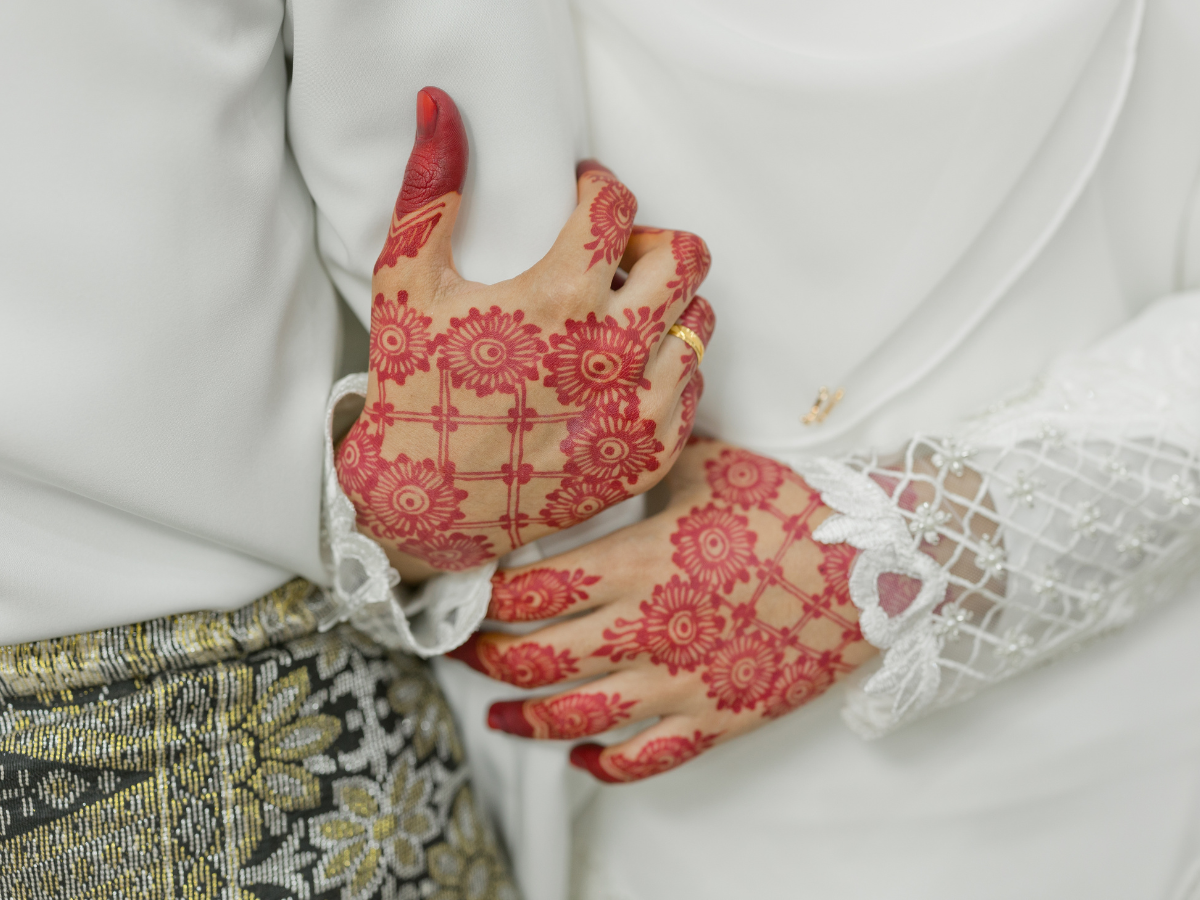
Muslims live across extraordinarily diverse cultures - Turkish, Nigerian, Indian, Indonesian, British, American, and dozens more. Local customs around weddings, gift-giving, dress, and celebrations vary widely, and many of these traditions can enrich a marriage celebration as long as they do not contradict Shari'ah. Henna nights, traditional garments, family gift exchanges, and unique walimah customs are all acceptable - and often beautiful - expressions of cultural identity within the framework of Islam.
The problems arise when cultural expectations override religious principles. Extravagant dowries that burden families financially, wedding events that involve free mixing and prohibited entertainment, and the treatment of women as commodities rather than partners - these are cultural distortions, not Islamic requirements. One example that deserves direct attention is the practice of arranged marriage in the coercive sense. While Islam does not oppose family involvement in matching - indeed, it encourages it - Islamic law prohibits forced marriages without exception. The Prophet ﷺ is reported to have annulled marriages performed without the woman's consent, and the hadith literature in Abu Dawud and other collections makes this standard unambiguous.
The distinction between an arranged marriage (where families facilitate introductions with the consent and active involvement of both parties) and a forced marriage (where one or both parties are compelled against their will) is critical. No paternal grandfather, no father, no male guardian has the right to force a Muslim woman into a marriage she does not want. Consent is a non-negotiable pillar of the nikah itself.
Couples navigating family expectations can take practical steps. Discuss early and clearly what is fard (obligatory), what is sunnah (recommended), and what is purely cultural. Set a budget that does not burden either family. Prioritize the nikah and walimah over extravagant events. Maintain respect for parents and elders while firmly upholding your rights under Islamic law. Faith-based services that prioritize Islamic values over cultural pressure, like those described in our mission and programs, can help families stay grounded in what actually matters.
The goal is not to strip marriage of cultural richness. It is to ensure that culture serves religion rather than replacing it. When family affairs are managed with wisdom, patience, and a clear understanding of Islamic priorities, the result is a marriage that honors both heritage and faith.
Steps for Singles: Preparing Yourself for Marriage in Islam
If you are a young man or a Muslim woman preparing for marriage, the preparation begins long before you meet your spouse. Marriage is a serious commitment, and walking into it unprepared - spiritually, emotionally, or practically - is a recipe for difficulty. The good news is that Islam provides a clear roadmap for preparation, and taking it seriously will set the foundation for a strong, lasting union.
Start with your spiritual life. Strengthen your salah, deepen your connection to the Qur'an, and work on your relationship with Allah before working on a relationship with another person. Refine your character - patience, honesty, modesty, and emotional self-regulation are not optional extras in a spouse. They are foundational. A person who cannot manage their own anger, communicate honestly, or show empathy will struggle in the intimacy and vulnerability that marriage demands.
Practical readiness matters too. Understand the basic fiqh of marriage and family life - your rights, your responsibilities, and the Islamic framework for resolving disputes. Build financial stability appropriate to your circumstances. You do not need to be wealthy, but you do need to have a realistic plan for providing for a family. Learn to manage a household, cook a meal, handle finances, and navigate adult responsibilities.
Guard your modesty in interactions with the opposite sex. Avoid relationships that compromise chastity or that could undermine trust in a future marriage. Guarding your private parts and lowering the gaze are not just abstract commands - they are practical disciplines that preserve your emotional and spiritual integrity for the person you will eventually share your life with.
Before you begin searching, ask yourself honest questions:
What is my purpose of marriage? Is it to please Allah, or to satisfy family or social pressure?
What do I expect from a spouse, and what am I willing to offer in return?
What are my non-negotiable values regarding children, career, and religious practice?
Am I ready for the compromises and sacrifices that married life requires?
What kind of family life do I want to build?
These questions are not meant to paralyze you with overthinking. They are meant to clarify your intentions so that when you do find the right person, you approach the relationship with maturity and purpose. Platforms like Love InshaAllah and other educational resources can support this preparation by reminding you to seek Allah first, then take practical means through a Muslim matchmaking program grounded in Islamic ethics.
Finding a spouse is not entirely within your control. But preparing yourself is. Tawakkul - trust in Allah - means doing everything within your power and then surrendering the outcome to Him. Make du'a consistently, with sincerity and specificity. The Qur'an teaches us the beautiful supplication in Surah Al-Furqan 25:74:
"Our Lord, grant us from among our spouses and offspring comfort to our eyes and make us an example for the righteous."
This du'a captures everything a Muslim could want from marriage: a spouse who brings comfort, children who bring joy, and a family that stands as a model of righteousness in society. Allah bless every sincere seeker with a companion who helps them find tranquility, grow in faith, and build a life that earns His pleasure.
Marriage in Islam is not simply a milestone to check off - it is a lifelong act of worship that shapes your character, your family, and your legacy. When both spouses center their relationship around Allah's pleasure, when they find guidance in the Qur'an and Sunnah rather than in cultural noise or fleeting desire, they build something that endures. May every Muslim who reads this be granted the clarity to prepare well, the courage to choose wisely, and the patience to nurture a marriage that truly reflects the beauty of this faith.