
Nikah Islamic Wedding Ceremony: A Complete Guide for Modern Muslims
A nikah islamic wedding ceremony is one of the most sacred moments in a Muslim couple’s life. It is simple in form, deep in meaning, and powerful in responsibility: two people enter a marriage contract before Allah, with consent, witnesses, mahr, and sincere intention.
This guide walks through the spiritual meaning, legal basics, ceremony flow, family roles, cultural traditions, and modern concerns that many Muslim couples face today—especially in Western countries where religious and civil marriage processes may be separate.
What Is a Nikah in Islam?
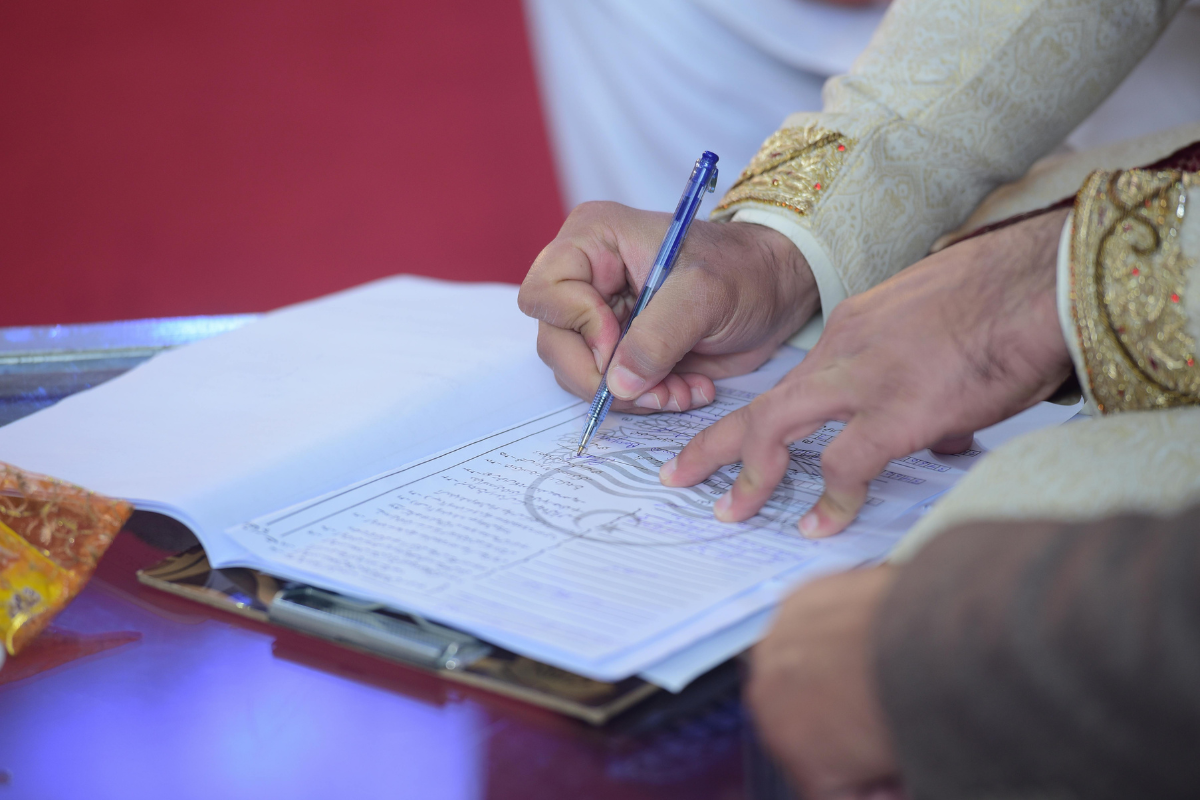
A nikah is the Islamic marriage contract and the core religious ceremony within a Muslim wedding. In Arabic, nikah means union, and in Islamic law it refers to the sacred agreement that joins a bride and groom as husband and wife in the sight of Allah.
The Nikah is a religious ceremony for Muslim couples that legally weds them under Islamic law, marking the union in the eyes of God. Once the nikah is valid, the couple are Islamically married, and intimacy becomes halal. However, “marriage” in many countries also requires a marriage license or civil ceremony to secure legal rights.
Many Muslim couples choose to complete the nikah ceremony and civil marriage on the same day, or within the same week. This protects both spouses, especially the bride, in matters such as inheritance, divorce, housing, and financial support.
Nikah vs. Civil Marriage: Understanding the Differences
Imagine a revert sister in the UK who has her nikah at a local mosque on Friday, surrounded by family members and friends. The following week, she and her husband sign their civil marriage paperwork at the registry office. Spiritually, the nikah made them husband and wife before Allah; legally, the civil process helped the state legally recognize their marriage.
These three layers often overlap but are not the same:
Islamic Marriage: The religious marriage contract before Allah, a wali, and Muslim witnesses.
Civil Marriage: The state-recognized contract.
Cultural Wedding Events: Wedding reception, mehndi, walimah, and other traditions shaped by family customs.
In many Muslim-majority countries, the Islamic marriage contract is integrated into state systems. In Western countries such as the US, UK, Canada, and Australia, a nikah alone may not be sufficient for legal protection. Most scholars strongly encourage couples to combine nikah with civil marriage, especially to protect rights regarding divorce, inheritance, and financial support.
If you are meeting someone through a faith-based pathway such as a Muslim matchmaking program, serious conversations should aim toward a complete, transparent nikah and legal marriage—not uncertainty. Always consult a trusted imam, marriage official, or family lawyer in your locality about the legal status of nikah-only unions.
Spiritual Foundations of Marriage in Islam
Marriage in Islam is not merely a social arrangement; it is a sacred covenant built on mercy, tranquility, and moral responsibility. The Qur’an beautifully describes this:
“And among His signs is that He created for you mates from yourselves that you may find tranquility with them, and He placed between you affection and mercy. Indeed in that are signs for a people who reflect.”
— Surah Ar-Rum, 30:21
Nikah is part of Islamic tradition and the Sunnah of the Prophet ﷺ for those able to fulfill its responsibilities. Islam does not teach monastic life as the ideal path for everyone; rather, marriage protects chastity, nurtures emotional companionship, builds families, and helps spouses grow spiritually together.
The Prophet ﷺ also emphasized consent and dignity:
“A matron should not be given in marriage except after consulting her; and a virgin should not be given in marriage except after her permission. Her silence indicates her permission.”
— Sahih al-Bukhari
Scholars differ on details such as wali conditions or age-related capacity, but they agree that consent, justice, and kindness sit at the center of marriage in Islam.
Mahram rules also shape who a person can or cannot marry, such as close blood relatives and certain family relations. For a deeper explanation, see the Meaning of Mahram, especially when families explore proposals across complex kinship lines.
Core Requirements of a Valid Nikah Islamic Wedding Ceremony
While outward styles vary, the foundations of a valid nikah remain consistent:
Eligibility: No forbidden mahram relationship; bride not in iddah; no other Islamic barriers.
Interfaith Considerations: Many scholars allow Muslim men to marry chaste Jewish or Christian women, while most advise Muslim women to marry Muslim men to ensure faith leadership and religious upbringing.
Ijab and Qubul: Verbal offer and acceptance, usually with the bride's guardian making the proposal and the groom accepting it in the presence of witnesses.
Wali (Guardian): The bride's father is usually the wali and gives her away only with her permission; if he is unavailable, another eligible male guardian may step in. The Hanafi school allows more agency for an adult woman in certain cases.
Witnesses: Minimum of two male Muslim witnesses to attest to free consent.
Mahr (Dowry): An obligatory gift from groom to bride symbolizing responsibility and respect. Forced marriage is not accepted; consent is essential.
The Prophet ﷺ annulled a marriage where the bride was forced against her will, emphasizing the importance of consent (Sahih al-Bukhari 5138).
Step-by-Step Flow of the Nikah Ceremony
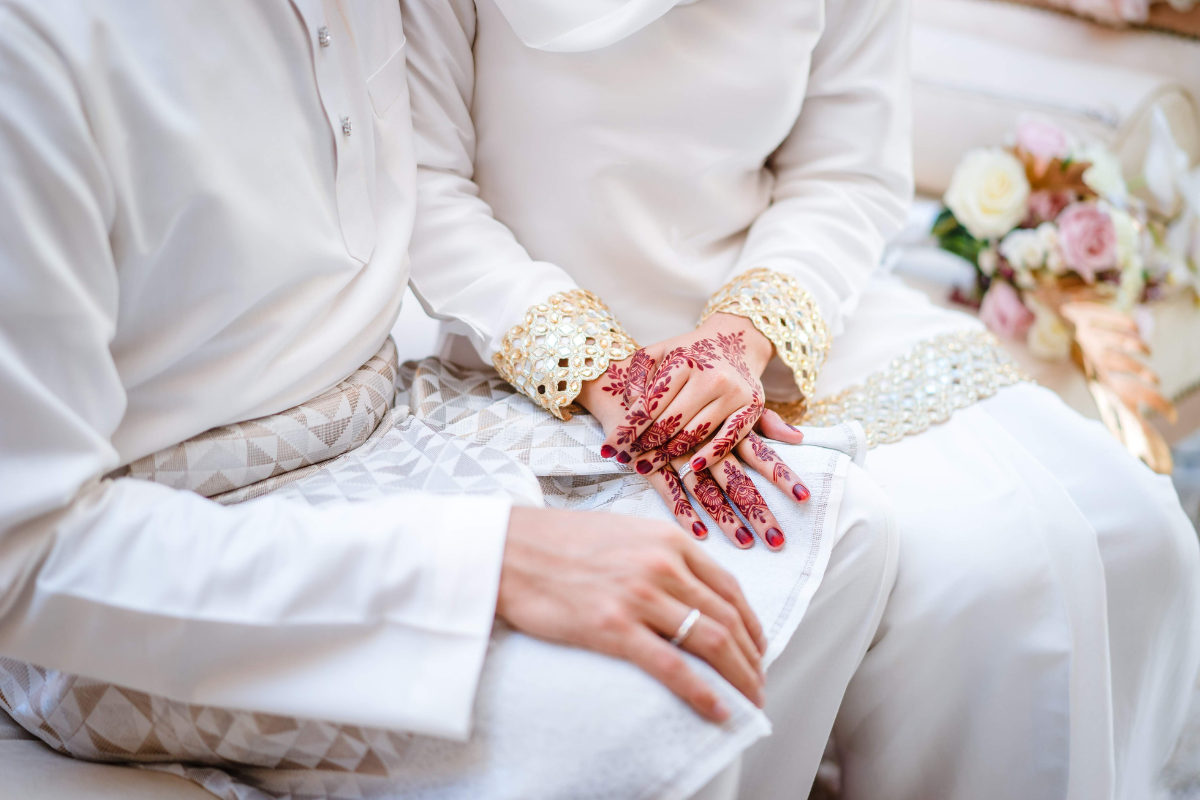
The nikkah ceremony is the heart of a Muslim wedding, and while it may be simple and brief or more elaborate depending on culture, it remains the central religious rite. Typical steps include:
Arrival and Seating: Families and guests gather; some communities use family seating, while in others women sit separately.
Opening: The officiant begins with basmalah, verses from the Holy Quran, and dua to bless the event.
Khutbah al-Nikah: A short wedding sermon highlighting marriage’s significance, responsibilities, and virtues.
Declaration of Mahr: The agreed dowry is clearly stated.
Ijab and Qubul: The offer and acceptance are pronounced aloud, and both the bride and the groom must clearly accept the marriage contract.
Signing the Nikah Nama: The marriage contract is then signed by the couple, wali, and witnesses.
Dua and Blessings: The officiant prays for the couple’s happiness and mercy.
On the wedding day, a wedding celebration may also follow the Nikah, depending on local custom.
After the ceremony, cultural rituals like the Arsi Mushraf may follow, where the couple shares a first glance through a mirror to symbolize their new bond as husband and wife, though these are cultural rather than contractual requirements.
The Marriage Contract (Nikah-Nama) and Mahr
The nikah-nama is the formal written contract that legally and religiously binds the couple, and couples often receive a nikah certificate alongside it for recordkeeping and recognition. It typically includes:
Names of bride and groom
Details of the agreed mahr
Signatures of both parties, wali, and witnesses
Any agreed conditions or clauses
Couples may include conditions about education, work, relocation, counseling, or consent before additional marriages. Discussing these beforehand with a qualified scholar ensures clarity and mutual understanding, especially since proving a muslim marriage or enforcing clauses may be more straightforward in a muslim country than in non-Muslim settings.
The Mahr can be prompt, deferred, or split and may take various forms such as money, property, teaching Qur’an, or paying debts. It is the bride’s right, not a gift to her family.
In many Muslim-majority countries and some islamic countries, Islamic family courts can enforce mahr obligations, including cases of non-payment or inadequate payment. In non-Muslim countries, couples should understand how local laws treat mahr. Early, honest conversations about mahr and finances are encouraged to build trust.
Nikah and Civil Marriage: Protecting Rights in Modern Societies
In many Western countries, a Muslim marriage or nikah alone may not be legally recognized by the state. Without civil registration, spouses may lack rights to:
Spousal maintenance
Inheritance
Healthcare decisions
Child custody
Division of marital assets
Couples may need a nikah certificate and separate civil registration because muslim community recognition does not automatically create civil rights.
Couples should obtain a civil marriage license and register their marriage where required. Seeking advice from both a trusted imam and qualified family-law professional can safeguard rights and dignity.
If a private nikah was conducted without civil paperwork, it is important to seek counsel and regularize status where possible, especially for muslim community institutions trying to help couples navigate non-Muslim legal systems.
Roles of Wali, Witnesses, and Officiant
Wali: The bride’s guardian and protector, ensuring her interests and consent. Usually a male guardian, such as the bride’s father, brother, or another close male relative depending on the circumstance; a bride's brother may serve if he is the appropriate guardian in line with local scholarly practice. In some schools, an adult woman may contract her own marriage.
Witnesses: Ensure transparency and consent; usually two adult male muslim witnesses or one male and two females.
Officiant: Usually an imam or knowledgeable Muslim who conducts the ceremony and ensures all requirements are met, though a devout male relative may sometimes conduct the nikah if qualified and accepted locally.
Dress Code, Venue, and Guest Etiquette at a Muslim Wedding
Dress Code: Modest attire covering shoulders, chest, and legs is recommended. Women may wear a scarf, especially in mosques.
Venue: Mosques require shoe removal and quiet reverence, and wedding guests should follow the host’s guidance at both the ceremony and reception; community centers and homes may have more flexibility.
Seating: In some Muslim cultures, men and women sit separately, while other families prefer mixed or family seating.
Etiquette: Arrive on time, participate respectfully in prayers and dua, and seek permission before photographing women, especially in hijab.
For guidance on emotional maturity in relationships, see signs a man love you.
Global Muslim Wedding Traditions Around the Nikah
While the religious structure of nikah is consistent, Muslim weddings vary across regions, including the Middle East, South Asia, and Southeast Asia, in ceremony style, attire, and celebration length:
South Asia: Multiple events including mehndi, baraat, rukhsati, and walimah, often involving both the bride's family and the groom's family across separate functions.
Arab World: Single-day ceremonies with katb al-kitaab, zaffe, and dabke, with Arab and middle east celebrations often centered on a single major reception rather than several days of events.
Southeast Asia: Akad nikah overseen by religious and government officials, and in Indonesia the nikah is overseen by both a religious officiant and a government official, followed by processions and bersanding.
The Walimah feast is hosted by the groom’s family as a public declaration of marriage, bringing the Muslim community and the two families together publicly after the nikah without extravagance or alcohol.
Some Shi’a communities practice temporary marriages (Nikah mut’ah), which differ from traditional nikah and are generally not accepted by Sunni scholars.
Life After Nikah: Rights, Responsibilities, and Compassion
Marriage is a lifelong journey marked by mercy, patience, and mutual respect. The Qur’an commands kindness:
“O you who have believed, it is not lawful for you to inherit women by compulsion. And do not make difficulties for them… And live with them in kindness…”
— Surah An-Nisa, 4:19
Responsibilities traditionally include:
Husband’s financial support
Wife’s right to respectful treatment and accommodation
Shared duties of communication, child-rearing, and consultation
Challenges may arise; scholars encourage shura (mutual consultation), counseling, and sincere efforts before separation.
For spiritually grounded reflections on halal love, visit Love, InshaAllah.
Planning Your Own Nikah Islamic Wedding Ceremony with Ihsan
Whether single, engaged, divorced, widowed, or revert, planning nikah need not be overwhelming. Begin with sincere intention for Allah’s sake. Seek compatibility in deen, character, maturity, and life goals before focusing on ceremony details. Some couples begin with a marriage proposal guided by family input and faith considerations.
Involve emotionally mature elders early. Clarify mahr, living arrangements, finances, and boundaries before setting the date. Schedule nikah and civil processes with ample time for paperwork, especially across borders. Planning may differ across Islamic countries and non-Muslim settings because local law and custom shape the process. The goal is to organize a meaningful traditional ritual without excess.
A nikah does not require extravagance. The most meaningful ceremonies focus on Allah, protect rights, and avoid social pressure. In some cultures, post-wedding customs may include a visit to the bride's home, but that is optional rather than religious. Above all, this sacred event should reflect Islamic values and Islamic principles rather than social pressure.
If facing complexities such as second marriage, intercultural expectations, or family resistance, explore our mission and programs for compassionate support.
May Allah place sakinah, mawaddah, and rahmah in every heart searching for halal love, and bless every couple preparing for their nikah islamic wedding ceremony with clarity, protection, and lasting mercy.