
What Is Halala Nikah? A Clear Guide to Its Meaning and Implications
Many Muslims search what is halala nikah during moments of confusion, pain, or fear after divorce. The concept of halala, as understood in Islamic law and social practice, refers to a situation where a woman, after receiving a final third divorce from her husband, may only remarry him if she subsequently enters into a genuine marriage with another man, and that second marriage ends naturally through divorce or death. This practice carries legal, religious, and ethical dimensions, and has been the subject of significant controversy among scholars, religious leaders, and the Muslim community, particularly regarding its ethical and social implications.
The practice and its boundaries were addressed during the time of Prophet Muhammad, who introduced reforms to protect women's rights within marriage and divorce. Islamic guidance does not treat this topic lightly. It protects marriage from impulsive divorce, safeguards women from being moved between men, and reminds families that Allah’s limits are not emotional tools. For Muslims seeking marriage with sincerity through faith-based spaces, understanding the divorce process—including the steps, waiting periods, and reconciliation efforts prescribed in Islamic law—is essential. The third divorce is known as an irrevocable divorce, after which remarriage is only possible under specific conditions, such as those outlined in the concept of halala. This topic requires knowledge, mercy, and careful guidance.
Quick Answer: What Is Halala Nikah in Islam?
Halala nikah refers specifically to the situation that arises after a third irrevocable divorce, when a husband has divorced his wife for the third and final time. In this context, Islamic law states that the divorced wife cannot remarry her former husband unless she first marries another man in a genuine marriage, and that marriage is then ended either by divorce or widowhood.
The Qur’an says:
“And if he has divorced her [for the third time], then she is not lawful to him afterward until [after] she marries a husband other than him. And if the latter husband divorces her [or dies], there is no blame upon the woman and her former husband for returning to each other if they think that they can keep [within] the limits of Allah. These are the limits of Allah, which He makes clear to a people who know.” Surah Al Baqarah 2:230, Sahih International.
This verse establishes that, under Islamic law, a divorced wife must remarry another man and only if that subsequent marriage ends, may she remarry her former husband. Legal scholars have discussed and debated the interpretation and application of this ruling within Islamic law, considering its implications for marriage, divorce, and women's rights.
This verse describes a serious legal and spiritual boundary. It does not encourage arranged temporary marriage, secret exploitation, or using another man as a pathway back to the first husband.
Halala Meaning in Islam
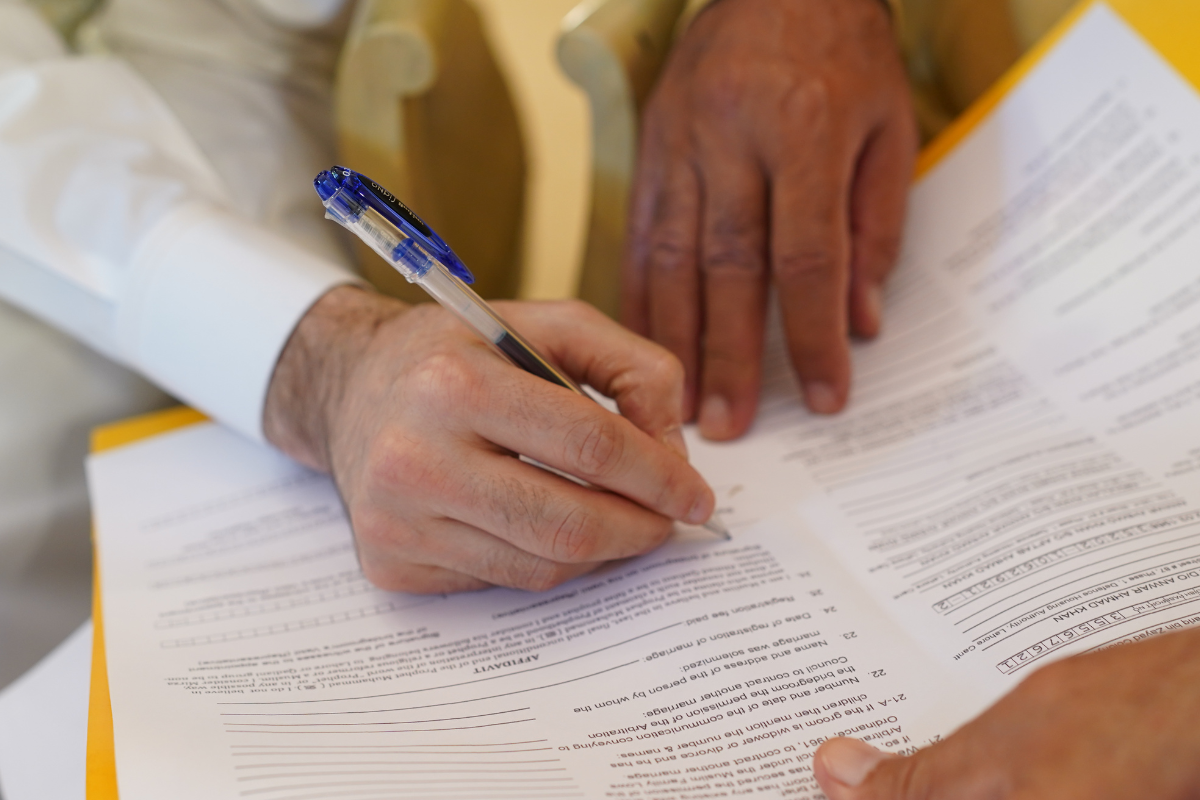
The phrase halala meaning in Islam is often misunderstood because people use it for two different things.
The first meaning is the Qur’anic situation after a final third divorce. A woman may later return to her first husband only if she genuinely married another man, lived in a genuine marital relationship, and that second marriage ended without a pre-arranged plan. This second marriage is referred to as a halala marriage, and Islamic law emphasizes that the practice of nikah halala is only valid when the second marriage is a genuine marital relationship, not a staged or temporary arrangement.
The second meaning is the misuse of halala, where people arrange a short marriage only to make the woman available again for her previous husband. This is usually called tahleel marriage in classical discussions. Islamic hadith strongly warns against this kind of arranged practice.
Readers who want a focused glossary style explanation can also read Halala Meaning in Islam for related background.
Why Halala Is Connected to Irrevocable Divorce
Islamic divorce is not meant to be reckless. The Qur’an teaches that divorce should happen with restraint, reflection, and good treatment.
Allah says:
“Divorce is twice. Then, either keep [her] in an acceptable manner or release [her] with good treatment. And it is not lawful for you to take anything of what you have given them unless both fear that they will not be able to keep [within] the limits of Allah. But if you fear that they will not keep [within] the limits of Allah, then there is no blame upon either of them concerning that by which she ransoms herself. These are the limits of Allah, so do not transgress them. And whoever transgresses the limits of Allah - it is those who are the wrongdoers.” Surah Al Baqarah 2:229, Sahih International.
This verse shows that marriage and divorce both carry ethical responsibility. A husband should not use divorce words as threats, punishment, or emotional pressure. In Islamic jurisprudence, the process of divorce includes the concept of 'triple talaq,' where the husband pronounces divorce three times. After the third pronouncement, the divorce becomes final and irrevocable. At this point, the woman cannot return to her original husband unless she has lawfully married another man, and that marriage has ended. Islamic jurisprudence provides detailed guidance on the process and implications of triple talaq, the third pronouncement, and the conditions under which remarriage to the original husband is permitted, including the practice of halala.
Natural Remarriage Versus Planned Halala
A natural second marriage and a planned halala arrangement are not the same.
A natural case means the woman completes her waiting period after the final divorce, later marries another man sincerely, and lives in that marriage as a real wife. In such a genuine marital relationship, sexual intercourse (sexual relations) must occur naturally as part of the marriage, not as a mere formality or legal device. If that second marriage later ends through divorce or death, she may consider remarrying her first husband with a new nikah if both believe they can maintain Allah’s limits.
A planned halala arrangement means people set up a marriage with the intention that the second husband will divorce her so she can return to the first husband. Many contemporary Islamic scholars agree that such intentional or arranged halala violates Islamic principles, as it reduces marriage to a technicality and exposes women to potential sexual exploitation. Scholars emphasize that the second marriage must be genuine, not staged for the purpose of enabling remarriage to the first husband.
The Prophet ﷺ said:
“Curse be upon the one who marries a divorced woman with the intention of making her lawful for her former husband and upon the one for whom she is made lawful.” Sunan Abi Dawud 2076.
This hadith is direct and serious. A Muslim family should never pressure a woman into a staged marriage in the name of fixing divorce.
What Conditions Must Exist Before Returning to the First Husband?
After a final third divorce, returning to the first husband is not a simple private decision. Islamic guidance places clear conditions around it.
A careful summary includes:
The first marriage ended through a final third divorce.
The woman completed the required waiting period.
She later entered a genuine nikah with another husband.
Such a marriage (the second marriage) must be real, not a temporary arrangement or pre-planned solely for the purpose of halala.
The second marriage was consummated.
The second marriage ended naturally through divorce or death.
The waiting period (iddah) must be observed after the second marriage before the woman can remarry her former husband, ensuring she is not pregnant and allowing time for reflection.
A new nikah, mahr, and consent are required if she remarries the first husband.
These conditions protect the dignity of marriage. They also prevent a husband from repeatedly divorcing and reclaiming his wife without accountability.
The Hadith About Consummation
The hadith of the wife of Rifa’ah is often mentioned in discussions about what is halala nikah. It shows that a formal marriage contract alone is not enough for return to the first husband after the final third divorce.
Sahih Muslim records:
“Perhaps you wish to return to Rifa’a, (but you) cannot (do it) until he has tasted your sweetness and you have tasted his sweetness.” Sahih Muslim 1433b.
This hadith must be handled with modesty and care. Scholars cite it to explain that the second marriage must be a real marital relationship, not a paper arrangement. The requirement, as clarified by scholars, is that actual sexual intercourse must occur in the second marriage as part of a genuine marital relationship, not as a mere formality or for legal purposes related to halala. It should never be used to shame women or pressure them into harmful situations.
Why Islam Takes This Topic So Seriously
The wisdom behind this ruling is not harshness. It protects marriage from being treated casually and upholds core Islamic principles such as justice, dignity, and the protection of women's rights.
If a man could repeatedly divorce his wife and take her back without serious consequence, divorce could become a weapon. The finality after the third divorce forces reflection. It teaches restraint before words are spoken and responsibility after words are spoken.
This guidance also protects women from being trapped in cycles of anger, regret, return, and repeated emotional harm. However, critics of Nikah Halala argue that the practice can sometimes lead to exploitation, as some women may be pressured into temporary marriages solely to fulfill the Halala requirement. Such situations can undermine the Islamic principles of consent and dignity, and perpetuate gender inequality by violating women's rights and autonomy. Islam encourages reconciliation when it is healthy, but it also recognizes that some separations need firm boundaries.
Common Misuse of Halala Nikah
Many modern concerns around nikah halala come from misuse. In some communities, a woman may be pressured into a short marriage with a stranger or family contact so she can return to her former husband. This misuse has led to the emergence of halala services, where individuals or religious facilitators arrange temporary marriages, sometimes resulting in forced marriages and exploitation. Such practices are often exploitative and can be emotionally harmful and spiritually dangerous.
Islamic guidance emphasizes consent, dignity, and the sacred nature of nikah. A woman should not be coerced, shamed, or treated as a tool to solve a man’s regret after divorce. Women's rights advocates have strongly condemned exploitative halala services and forced marriages, raising awareness and calling for legal and social reforms to protect women's dignity and rights within Islamic marriage practices. Many contemporary scholars and activists view arranged Nikah Halala as a form of sexual exploitation, arguing that it damages women's self-esteem and rights, and they advocate for reforms to eliminate such practices.
A marriage arranged only to end is not the spirit of Qur’anic guidance. The hadith warning about the muhallil and the muhallal lahu makes this concern clear.
What If the Divorce Was Said in Anger?
Many families search for halala because someone pronounced divorce in anger, confusion, or under pressure. This is exactly why people should not rush to online answers or social media opinions.
Divorce rulings can depend on wording, intention, state of mind, number of pronouncements, timing, local law, and scholarly school. The process of divorce and the practice of halala are governed by personal laws and religious laws, which can vary significantly by country and community. For example, in India, Nikah Halala is not illegal and continues to be practiced under Muslim personal law. Muslim personal law is based on religious texts rather than codified national laws, and these personal laws shape the legal status and societal implications of marriage and divorce within Muslim communities.
Some scholars treat three divorces in one sitting differently from others, while many legal systems have their own procedures.
A couple should speak to a qualified scholar before assuming the marriage has ended finally. They may also need legal advice depending on their country. Faith based guidance should protect both Islamic accuracy and family wellbeing.
Does Halala Apply After One or Two Divorces?
Halala does not apply after one or two revocable divorces in the same way it applies after a final third, which is considered an irrevocable divorce.
Surah Al Baqarah 2:229 mentions that divorce is twice, then the couple should either continue honorably or separate with good treatment. After one or two revocable divorces, there may be room for return within Islamic rules, depending on the waiting period and the circumstances.
However, after the third divorce—known as an irrevocable divorce—Surah Al Baqarah 2:230 creates a different boundary. The former spouses cannot simply remarry unless the Qur’anic condition involving another genuine marriage has occurred.
How Halala Relates to Muslim Matchmaking
Muslim matchmaking should never create shortcuts around Islamic limits. A sincere Muslim matchmaking should help people pursue marriage with honesty, readiness, and protection from emotional manipulation.
Within the Muslim community, there is a collective responsibility to uphold justice and dignity in all marriage practices, ensuring that women are protected from harmful customs and that Islamic values are maintained.
If someone has been divorced, the process should begin with clarity. A matchmaker or family should understand whether the divorce was final, whether the waiting period has ended, whether children are involved, and whether the person is emotionally ready for a new marriage.
The goal is not to hide complicated history. The goal is to approach marriage with truth and maturity.
Boundaries Before Marriage Matter
Many painful situations begin when emotional boundaries are unclear before marriage. Secret relationships, rushed commitments, and unclear intentions can make divorce and remarriage questions much more difficult later.
Islamic guidance encourages modesty, honesty, and purposeful communication before nikah. Readers who are trying to understand premarital boundaries may find helpful context in Can you kiss before Marriage, especially when learning how affection, intention, and Islamic values connect.
Marriage begins long before the wedding day. It begins with character, truthfulness, and respect for Allah’s limits. Setting clear boundaries and honest intentions before marriage helps ensure that both partners understand their rights and responsibilities, including the importance of financial support as part of Islamic family law.
Guidance for Women Facing Pressure
A Muslim woman should not be pushed into halala nikah by fear, family shame, or emotional pressure from an ex-husband. Muslim women have a fundamental right to dignity, safety, and consent in marriage, as protected by Islamic teachings and legal principles.
If she is told that halala is the only solution, she should pause and seek qualified guidance. She should ask whether the original divorce was valid, whether it counted as final, and whether any proposed second marriage is genuine or staged.
Helpful steps include speaking with:
A qualified local scholar who understands divorce law.
Local religious figures who can provide guidance, but should never pressure women into arrangements that compromise their rights or wellbeing.
A trusted Muslim counselor or mediator.
A family lawyer if civil marriage or custody is involved.
A safe family member who will support her dignity.
It is important to note that the Supreme Court of India is currently hearing multiple petitions challenging the constitutionality of Nikah Halala, arguing that it violates women's rights and fundamental freedoms as outlined in the Constitution.
A woman is not responsible for fixing someone else’s careless divorce words through a harmful arrangement.
Guidance for Men After Divorce
A man who regrets a divorce should begin with repentance, responsibility, and knowledge. He should not pressure his former wife or look for a technical workaround.
If he gave one or two divorces, he should ask a qualified scholar about the correct Islamic process. However, if he gave a final third divorce, he must respect the boundary set in the Qur’an: after a third talaq, the woman cannot remarry her original husband unless she has lawfully married another man, and that marriage has ended naturally. This distinction between the original husband and any subsequent spouse is essential in understanding the process of Nikah Halala and its religious implications.
A sincere man should also reflect on what led to the breakdown. Anger, poor communication, neglect, family interference, and emotional immaturity need healing before any future marriage.
Wedding Joy Should Not Hide Serious Questions
A new marriage deserves dignity, whether it is a first marriage or a remarriage after divorce. It should not be treated as a temporary arrangement or hidden transaction.
A Muslim wedding may include beauty, family joy, and cultural expression, but its foundation is the nikah itself. Religious leaders play an important role in guiding the community on the ethics and responsibilities of marriage, helping couples understand the spiritual and moral dimensions of their union. Readers preparing for marriage can explore modest style inspiration through Wedding Gown, while remembering that the deeper beauty of marriage is sincerity, mercy, and trust.
What Scholars Generally Agree On
Most Islamic scholars agree that after a final third divorce, the former couple cannot remarry unless the woman has genuinely married another husband and that marriage later ends, as stated in Surah Al Baqarah 2:230. However, scholars argue about the validity and ethical implications of Nikah Halala, with differing interpretations and debates among progressive, conservative, and reformist viewpoints.
Nikah Halala has faced significant criticism, particularly in India, from women's rights advocates, legal scholars, and various community leaders who argue that it undermines women's rights and dignity. Additionally, Nikah Halala is interpreted differently among Sunni and Shia communities: Sunni scholars generally accept it as a legitimate practice based on specific interpretations of the Quran and Hadith, while Shia scholars often question its necessity and validity. Among Sunni jurists, Hanafi scholars consider Nikah Halala valid but label it as abominable (makruh), Shafi'i jurists argue its validity depends on whether the marriage contract includes a condition for subsequent divorce, and Maliki and Hanbali jurists deem it invalid altogether.
Most scholars also strongly condemn a staged tahlil marriage because of the hadith warning about the one who marries with the intention of making the woman lawful for her former husband.
Islamic scholars may differ on technical legal details, such as how to count certain divorce pronouncements or how intention affects the legal status of a specific marriage contract. Because these details can change the outcome, families should not rely on generic advice for personal cases.
A Compassionate Way to Discuss Halala
Halala nikah is not a topic for jokes, gossip, or public shaming. It often appears when families are already hurting.
A compassionate Islamic approach asks:
Was the divorce actually final according to qualified guidance?
Was the woman pressured or fully respected?
Is anyone trying to use marriage as a temporary tool?
Are children, finances, and emotional safety being protected?
Have both Islamic scholarship and local law been considered, especially as the Supreme Court of India and the central government are currently involved in ongoing legal debates about the constitutionality of Nikah Halala? Notably, the Supreme Court is hearing multiple petitions challenging the practice under Articles 14, 15, and 21 of the Constitution, and in the landmark Shayara Bano v. Union of India case, it declared triple talaq unconstitutional, which has significant implications for Nikah Halala. The All-India Muslim Personal Law Board (AIMPLB) has defended Nikah Halala in court, arguing it is part of Islamic culture and tradition, protected under Articles 25(2) and 29 of the Indian Constitution.
This approach reflects our mission and programs, where Muslim marriage conversations should be honest, spiritually grounded, and emotionally safe.
FAQs
What is halala nikah in simple words?
Halala nikah refers to the situation after a final third divorce where a woman cannot remarry her first husband unless she later has a genuine marriage with another husband, and that second marriage ends naturally through divorce or death. It should not be confused with staged temporary marriage.
Is planned halala allowed in Islam?
Islamic hadith strongly warns against planned tahlil marriage. The Prophet ﷺ said, “Curse be upon the one who marries a divorced woman with the intention of making her lawful for her former husband and upon the one for whom she is made lawful.”
Does halala apply after one divorce?
Halala does not apply after one divorce in the same way it applies after a final third divorce. After one or two divorces, Islamic rules may allow reconciliation or remarriage depending on the waiting period and circumstances. A qualified scholar should review the case.
Can a woman be forced into halala nikah?
A woman should not be coerced into marriage. Nikah requires consent, and Islamic ethics protect dignity, safety, and sincere intention. Anyone facing pressure should seek qualified religious, legal, and family support.
Is consummation required before returning to the first husband?
The hadith of Rifa’ah’s wife shows that a real marital relationship with the second husband is required before she may return to the first husband after a final third divorce. Sahih Muslim records, “Perhaps you wish to return to Rifa'a, (but you) cannot (do it) until he has tasted your sweetness and you have tasted his sweetness.”