
Can Imams Marry? Understanding the Role of Imams in Muslim Weddings
Marriage sits at the heart of Islamic life - and yet, many Muslims wonder whether their imam is even allowed to marry. Whether you are a community member curious about your imam's personal life or someone considering marriage to a religious leader, this guide walks through the rulings, the history, and the real-life questions that matter most.
Direct Answer: Can Imams Marry Like Other Muslim Men?
Yes - imams can marry, and most imams throughout Islamic history have been married men with families. Imams do not have a requirement for celibacy in Islam. The role of an imam in Sunni practice is functional: leading prayers, delivering the Friday khutbah, teaching the Quran, and offering spiritual guidance. It is not a separate priestly class, and there is no vow of singleness attached to it.
This stands in clear contrast to Catholic priests, who take vows of celibacy, or certain Buddhist monks who renounce marriage as part of their religious discipline. In Islam, the idea that a person must give up marriage to serve God is not something rooted in scripture or tradition.
The same rules of islamic marriage that apply to ordinary muslim men and muslim women also apply to imams. Marriage is highly encouraged in Islam, and imams are allowed to marry just like any other believer.
History confirms this. Imam Abu Hanifa (d. 767 CE), Imam Malik (d. 795 CE), Imam al-Shafi'i (d. 820 CE), and Imam Ahmad ibn Hanbal (d. 855 CE) were all married men who had children. Scholarship and family life have always coexisted.
If you know an imam who is single, do not assume his piety requires it. A stable family life often strengthens his service to the muslim community - not weakens it.
What Does "Imam" Actually Mean in Islam?
Understanding whether imams can marry starts with clarifying what the word "imam" actually means across different communities.
In many Sunni mosques, the imam is the person who leads the five daily prayers, gives the Friday khutbah, teaches the Koran, and may offer guidance on marriage and divorce. He is selected for his knowledge, character, and ability to recite - not ordained into a separate caste.
In Shia contexts, especially Twelver Shi'ism, "Imam" (capital I) refers to the line of divinely appointed, infallible leaders beginning with Imam Ali and continuing through Imam al-Mahdi. This is a distinct theological concept from the local mosque imam who leads your community prayers.
This article focuses on local mosque imams and scholars - the ones who officiate the nikah ceremony, counsel married couples, and teach kids their surahs on weekends.
Imams are laypeople who studied islamic sciences. They are not a priestly caste, and their religion does not impose any special marriage prohibitions beyond normal islamic law. In countries like the UK, US, and Canada, many imams serve part-time or on a volunteer basis, working as teachers, engineers, or doctors alongside their family life.
Foundations: How Islam Views Marriage for All Believers
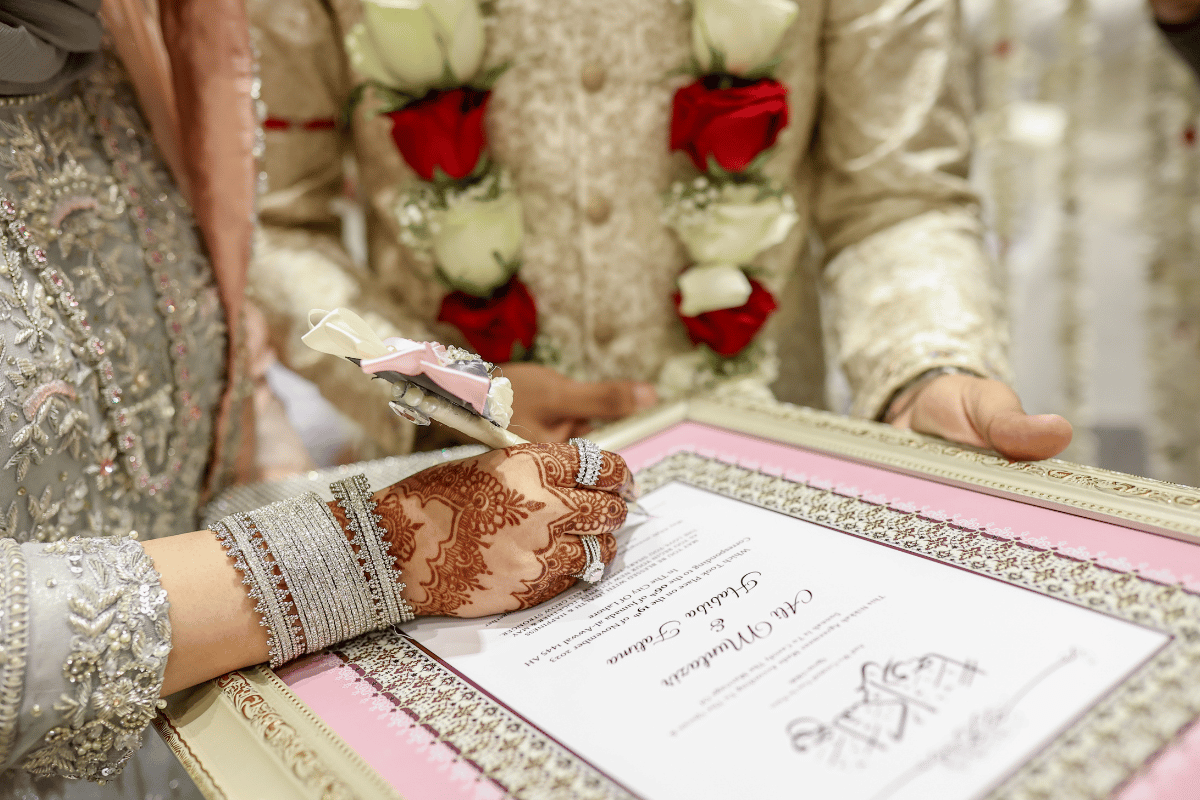
Islamic marriage - nikah - is a sacred contract, not a sacrament. It carries tremendous spiritual weight, and it is strongly encouraged for every adult muslim who can fulfill its rights and responsibilities. Marriage is considered a way to protect one's faith in Islam.
The Quran frames marriage as a divine gift of companionship:
"And of His signs is that He created for you from yourselves mates that you may find tranquility in them; and He placed between you affection and mercy." (Surah Ar-Rum, 30:21)
And the hadith literature echoes this encouragement with equal clarity:
"O young men, whoever among you can afford it, let him marry, for it is more effective in lowering the gaze and guarding chastity…" (Sahih al Bukhari, 5066)
These ayat and ahadith are general. They apply equally to imams, Quran teachers, community volunteers, and every person seeking closeness to Allah. No one is exempt from the mercy embedded in this guidance.
The goals of islamic marriage include protecting faith and modesty, building companionship, offering mutual emotional support, and raising children in a righteous family. Organizations focused on modern Muslim relationships, like Love, InshaAllah, exist precisely because marriage remains central to spiritual and emotional wellbeing - for imams and everyone else.
Evidence That Imams Can Marry: Qur'an, Sunnah, and Early Scholars
There is no verse in the Quran or authentic hadith forbidding imams from marrying. The evidence points firmly in the opposite direction.
The Quran itself tells us that even prophets - the highest spiritual leaders in islam - had families:
"And We have already sent messengers before you and assigned to them wives and descendants." (Surah Ar-Ra'd, 13:38)
If God chose to bless His messengers with marriage, then the point is clear: ordinary religious leaders are certainly not required to remain celibate.
When some companions once pledged to avoid marriage and devote themselves entirely to worship, the Prophet ﷺ rejected this excessive asceticism directly:
"…I marry women; and whoever turns away from my Sunnah is not from me." (Sahih al Bukhari, 5063)
Classical scholars across all four sunni schools never imposed celibacy on mosque imams. In fact, many recommended marriage specifically for those involved in teaching and guiding others, because a married imam gains firsthand understanding of the struggles and joys of family life.
From an islamic jurisprudence perspective, an imam is a muslim man first. His default ruling regarding marriage is permissibility and strong encouragement - not prohibition. The freedom to marry is not a concession; it is part of the faith itself.
Are There Any Imams Who Choose Not to Marry?
While imams can marry, some personally choose not to - at least for certain periods of their lives. This is not something forbidden, but long-term voluntary celibacy is not recommended in mainstream Sunni and Shia fiqh.
Some early scholars delayed marriage to focus on intensive study or because of poverty, then married later when circumstances improved. This pattern continues today. An imam may stay single due to age, health, financial limitations, visa status in a non muslim country, or intense caregiving responsibilities for aging parents. These are personal choices, not religious requirements attached to the job.
Communities should avoid two extremes: pressuring a single imam into rapid marriage or assuming he is somehow less pious for being unmarried. A balanced, respectful conversation about long-term plans is far more helpful than whispered speculation after Friday prayer.
For converts serving as imams in small communities, finding a compatible muslim spouse can take time. Supportive matchmaking programs and guidance on how to date a single Muslim with sincerity and intention can make a real difference in navigating this journey.
Can an Imam Marry Someone From His Own Congregation?
This is one of the most common real-life questions: can a single imam marry a muslim woman who attends his mosque - or vice versa?
From a fiqh standpoint, there is no blanket prohibition. The standard Islamic marriage conditions apply:
Both parties must give mutual consent for a marriage to be valid in Islam
A valid wali (guardian) for the bride, where required by the school of thought
Presence of at least two reliable witnesses
An agreed-upon mahr
Clear offer (ijab) and acceptance (qabul)
However, ethical and pastoral concerns deserve serious attention. Power dynamics exist when an imam has been a spiritual counselor to someone in his congregation. The woman may feel emotional vulnerability, and the community may perceive favoritism or coercion.
Mosque boards or shura councils should create transparent guidelines: allowing the congregant to seek independent advice from another scholar, involving families early, and ensuring the proposal process is open rather than secretive.
If you are a muslim woman or man considering such a proposal, look for genuine signs of compatibility and emotional maturity. Resources like the guide on signs a man is falling in love with you can offer emotional insight - but always prioritize Islamic criteria of character and taqwa alongside your heart's instincts.
Can Imams Officiate Their Own Nikah Ceremony?
If an imam is getting married, can he lead his own marriage ceremony as the officiant?
Islamic jurisprudence focuses less on the person's title and more on whether the contract pillars are fulfilled: offer and acceptance (ijab and qabul), witnesses, wali (as required), and mahr. The officiant of a nikah ceremony can be any sane adult Muslim man - and according to some modern scholars of Hanafi fiqh, a qualified muslim woman may also officiate in certain situations, though male officiation remains the normative preference.
While it is theoretically possible for an imam to recite his own marriage formula, most scholars and communities recommend that another imam or elder scholar lead the ceremony to avoid confusion and maintain decorum. A groom who happens to be an imam typically delivers a short khutbah al-hajah or spiritual reminder, while a colleague handles the contract itself.
When civil marriage is required - as in the UK, Canada, Australia, or the US - a separate registrar or authorized officiant handles the legal side. The wedding may include both a religious nikah and a civil ceremony on the same date.
Imams, Islamic Marriage, and Civil Marriage in Non-Muslim Countries
In many Western countries, an Islamic nikah ceremony alone does not create a legally recognized civil marriage. This is a critical distinction that affects the rights of both the husband and the wife.
In the UK, for example, civil marriage is recommended for legal recognition. Unless the mosque is a licensed venue and the imam is a registered officiant, the couple must separately register their marriage with local authorities. Muslim couples must register their marriage with local authorities to secure legal protections around divorce, property, inheritance, immigration, and child custody - rights especially important for a muslim woman.
The numbers are telling: 95% of Muslim American couples obtain a civil marriage license alongside their nikah, recognizing that Islamic marriage contracts are not legally binding in non-Muslim countries. In Australia, a nikah certificate is essential for legal recognition as well.
It is also worth noting that Islam recognizes several contract variations beyond the standard nikah. Nikah mut'ah is a fixed-term marriage primarily practiced in Twelver Shi'ism, reintroduced in Iran after the 1979 Revolution. Nikah Misyar allows couples to marry without living together and is often used by men who cannot afford traditional marriage. Nikah 'urfi is a customary marriage not registered with authorities. Each of these carries distinct legal and ethical implications, and many couples benefit from understanding these differences before making commitments.
The practical recommendation is straightforward: talk to both a qualified local imam and a family lawyer in your country to ensure your marriage is valid Islamically and protected legally. Muslims navigating complex legal systems can benefit from resources that combine spiritual, emotional, and legal awareness - like our mission and programs at FindLoveIA.
Interfaith Marriage: What Can Imams Islamically Approve?
Across Europe and North America, some imams receive requests to officiate marriages between muslim women or muslim men and non muslim partners. This is one of the most sensitive topics in modern Islamic pastoral care.
The widely accepted Sunni view, grounded in the Quran, permits Muslim men to marry non muslim women who are chaste Christians or Jewish women - the "People of the Book":
"…[Lawful to you in marriage] are chaste women from among the believers and chaste women from among those who were given the Scripture before you…" (Surah Al-Ma'idah, 5:5)
Islam permits Muslim men to marry non-Muslim women under these conditions. However, Muslim women marrying non-Muslim men remains forbidden according to the majority of classical scholars across all four Sunni schools.
In practice, many imams refuse to marry Muslim women to non-Muslim men. Muslim women marrying non-Muslim men face significant challenges - both religiously and socially. Some Muslim women often travel to find imams willing to perform such ceremonies. Dr. Taj Hargey, based in Oxford, performed 36 interfaith marriages in two years under stringent conditions, but this remains a strongly contested position and is not accepted by most mainstream scholars.
Responsible imams follow the evidence as they understand it. They may decline to officiate an interfaith marriage they believe is impermissible while still offering compassionate pastoral support, prayer, and counsel to the couple navigating their relationship.
For Muslims in interfaith relationships, seeking multiple scholarly opinions is wise. Consider long-term faith implications - the religious upbringing of children, religious holidays, burial wishes, and the spiritual culture of your home. Explore sincerely whether the non muslim partner is open to learning about Islam, even if conversion is not immediate.
Practical Boundaries: Non-Mahram Rules Between Imams and Congregants
Even though imams hold positions of authority and trust, they are still non-mahram to most congregants. Standard modesty and interaction guidelines apply - there is no exemption based on title or gender.
Core non-mahram rules include:
Avoiding seclusion (khalwah) with someone of the opposite gender
Maintaining respectful physical distance
Lowering the gaze
Limiting emotional intimacy outside appropriate contexts
Questions about how to navigate these boundaries with teachers, mentors, and religious leaders are increasingly common. For a deeper understanding, the detailed guide on non mahram meaning in Islam is a valuable resource.
When an imam considers marrying a particular person from his community, he should consciously shift from a purely pastoral relationship to a transparent marriage-intention process - one that involves families or trusted elders from the start. This protects both parties from misinterpretation and emotional harm.
Imams must set a high bar for boundaries in private messages, counseling sessions, and social media interactions. Clear, modest, structured communication during the proposal and engagement process models healthy Islamic conduct for the entire community and builds culture rather than confusion.
Female Imams and Their Right to Marry
In parts of Europe and North America, women serve as imams for women-only congregations or lead mixed-gender prayers in specific progressive settings. Questions about their marital status naturally arise.
Female imams are also free to marry. There is no Islamic basis to demand celibacy from a woman serving in religious leadership, and she follows the same marriage rules as any other muslim woman. A female imam might officiate several ceremonies per month while also balancing her own family life and spiritual duties - these roles complement rather than contradict each other.
Like male imams, female religious leaders must observe non-mahram boundaries, seek compatibility and shared values in a spouse, and ensure that their nikah ceremony fulfills both legal and Islamic requirements.
Some female imams who are visible public figures may face extra scrutiny when choosing a partner, making emotional intelligence and clear communication even more crucial. Communities that genuinely support their religious leaders - regardless of gender - will encourage healthy marriages rather than assuming leadership demands perpetual singleness.
Balancing Imam Duties, Family Life, and Marital Rights
An imam who marries takes on two intense commitments: serving the community and serving his family. Islam expects him to honor both - and Islamic jurisprudence spells out the responsibilities clearly.
Key marital obligations include:
Financial maintenance (nafaqah): The husband is responsible for earning income to support the household
Emotional kindness: The Quran commands believers to "live with them in kindness" (Surah An-Nisa, 4:19)
Fairness in polygyny: Islam allows men to practice polygyny with up to four wives, but each wife must be treated equitably in time, resources, and affection
Mutual guardianship: Both spouses are considered guardians of their family
The wife is responsible for taking care of children, and she also has firm rights - including the freedom that a wife can refuse to live with her husband's family if she prefers her own household.
An imam's schedule - late-night calls, funerals, community emergencies, counseling sessions - can strain family life if boundaries and expectations are not discussed before and during the marriage. Practical strategies help: setting weekly family time, involving the spouse in community events where comfortable, and seeking support through modern relationship tips and communication resources.
A healthy marriage can actually deepen an imam's empathy when advising other families through conflict and growth. Communities should remember that imam families are human - capable of mistakes, deserving of privacy, and worthy of the same mercy and compassion they extend to others.
Guidance for Muslims Considering Marriage to an Imam
If you are thinking about marrying an imam or religious teacher, here are questions worth exploring during serious conversations:
What is your shared vision of service and community involvement?
What are the financial expectations, and where will you live?
How much public visibility is the spouse comfortable with?
What role will extended parents and families play in your daily life?
Imams often marry individuals sharing a high commitment to Islamic values - but knowledge alone is not enough. Look for emotional maturity: does he listen, apologize, manage stress, and show mercy? Or does he use religion as a tool for control? The difference between a partner and an authority figure matters deeply in a marriage.
Premarital counseling - Islamic plus psychological where possible - can address conflict styles, expectations around children, and the unique pressures of public religious life. Many couples find this step transforms their understanding of each other before the wedding day arrives.
Marrying an imam can be deeply beautiful, but it is not automatically easier than any other marriage. Success depends on mutual taqwa, continuous kindness, honest communication, and the shared commitment to grow together through every season of life. Bless each other with patience, hold each other with affection, and remember that the strongest marriages are built by two imperfect people who refuse to give up on each other - or on God.