
Is Kissing Haram in Islam? Clear Rulings, Exceptions, and Modern Situations
Few questions cause as much quiet anxiety among young muslims as this one: is kissing haram? Whether you're navigating an engagement, catching feelings for someone at university, or simply wondering where Islam draws the line on physical affection, this guide walks through the rulings with clarity, compassion, and real-world honesty.
Quick Answer: Is Kissing Haram?
Kissing in Islam is contextual based on relationship and intention. The short answer breaks down into three scenarios:
Romantic or sexual kissing between a non mahram person of the opposite sex is haram. Scholars classify this as a form of minor zina because it imitates and leads toward full unlawful intimacy.
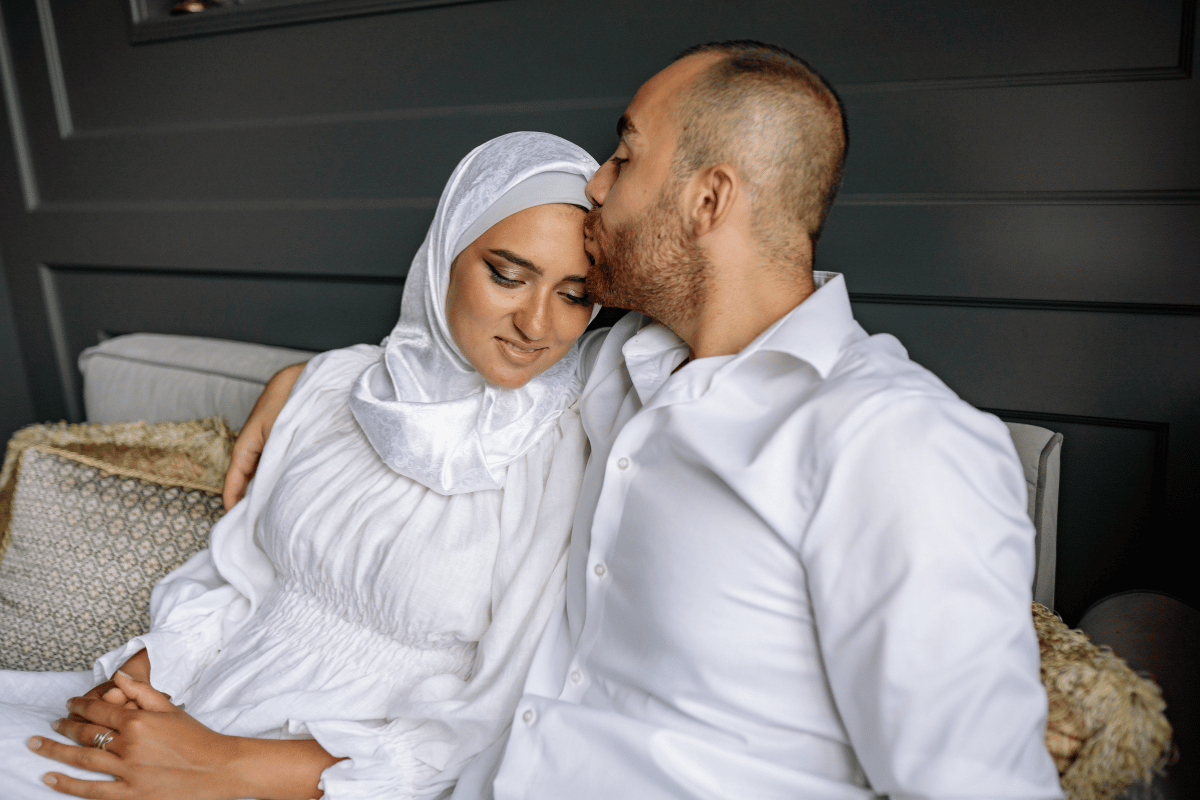
Affectionate kissing between husband and wife in private is halal, encouraged, and even spiritually rewarded.
Public kissing, even between spouses, is discouraged or sinful according to many scholars, because it conflicts with haya' (modesty) and may stir desire in onlookers.
Three factors shape every ruling on this topic:
Who - mahram versus non mahram
Where - private versus public versus digital
Why - lustful desire versus respect, greeting, or cultural warmth
If you've already crossed a boundary, know that sincere repentance wipes out sins entirely. Allah swt promises mercy to anyone who turns back with a genuine heart, so never despair. The rest of this article unpacks each scenario in detail.
Key Terms: Mahram, Non Mahram, and Different Types of Kissing
Before diving deeper, two Arabic terms appear throughout every discussion on physical contact in Islam. Understanding them removes most of the confusion.
A mahram is a person one cannot marry - a non-marriageable relative. These permanent ties come from three sources: blood (parents, children, siblings, uncles, aunts), breastfeeding, or marriage bonds (like a mother-in-law or stepfather). The Qur'an lists them explicitly in Surah An-Nur 24:31.
Non-mahrams are individuals of the opposite gender eligible for marriage. This includes cousins, classmates, coworkers, neighbors, and - importantly - a potential spouse before nikah is completed.
Not all kissing carries the same weight. It helps to distinguish:
Romantic or sexual kissing - lips, neck, or a love bite between unmarried people or non mahram individuals.
Affectionate family kisses - a parent kissing a child's forehead, or a grandparent pecking a grandchild's cheek. Kissing children is viewed as a virtuous act in Islam.
Cultural greeting kisses - cheek kisses among same sex individuals or family members, common in many muslim countries.
Rulings shift based on the body part kissed, the intent behind the gesture, and whether it happens privately, publicly, or digitally.
Qur'anic Foundations: Why Islam Restricts Certain Physical Affection
Islam's boundaries around physical contact exist to protect hearts, families, and communities - not to suppress love. The Qur'an sets broad principles that scholars then apply to specific situations, including kissing.
Surah An-Nur 24:30–31:
"Tell the believing men to lower their gaze and guard their chastity… And tell the believing women to lower their gaze and guard their chastity… and not to reveal their adornment except what normally appears…" (Qur'an 24:30–31)
The Quran instructs believers to lower their gaze and guard their private parts - a directive that applies to both muslim men and muslim women equally. Lustful looks are treated as the first step on a path toward greater transgression.
Surah Al-Isra 17:32:
"And do not come near to zina. Indeed, it is an abomination and an evil way."
Notice the phrasing: "do not come near to zina." Allah revealed this verse to cover not only actual fornication but every action that leads toward it - including lustful touching, kissing, and seclusion with a non mahram. The principle of avoiding actions leading to forbidden acts is deeply embedded in Islamic teachings.
Yet firmness and mercy always travel together. Allah swt's names Al-Ghafūr (The Most Forgiving) and Ar-Rahīm (The Most Merciful) remind us that boundaries are set by the same God who promises endless forgiveness to those who return sincerely.
Hadith Evidence: Kissing, Touching, and Minor Zina
Prophet Muhammad, peace and blessings be upon him, described what scholars call "minor zina" to help believers recognize how seemingly small acts connect to larger sins.
Sahih Muslim (2657):
"Verily Allah has decreed for every son of Adam his share of zina… The zina of the eyes is looking, the zina of the ears is listening, the zina of the tongue is speaking, the zina of the hands is touching, the zina of the feet is walking… and the private parts confirm or deny it."
This hadith mentioned by the prophet peace categorizes lustful kissing as part of the "zina of the hands" and "zina of the mouth." These are not full zina, but they open doors to it.
The prophet Muhammad said touching a non-mahram is severely prohibited. A specific hadith reported in Al-Mu'jam al-Kabir and graded sahih by al Albani states that it would be better for a person to have an iron needle or a nail driven into their head than to touch a non mahram woman. The severity of casual physical contact with the opposite gender could not be stated more clearly.
Another narration in Tirmidhi records that when companions asked about greeting with embraces and kisses, the prophet peace replied "No," permitting only the handshake among men.
Based on these texts, romantic kissing with a non mahram is considered a haram act by the vast majority of scholars and calls for sincere repentance.
Kissing Before Marriage: Engagement, Dating, and "Halal Talking"

"We're just engaged." "We plan to marry soon." "It was only one kiss." These are phrases many unmarried people use to justify physical affection - but Islamic law emphasizes maintaining boundaries with non-mahrams regardless of future plans.
Engaged couples remain non mahram until the nikah is completed. No amount of family involvement, ring ceremonies, or promises changes this legal reality. Kissing, love bites, hugging, and other actions between unmarried individuals remain forbidden until the marriage contract is signed.
What about a "harmless" kiss on the cheek, forehead, or hand with a potential spouse? Most scholars still classify this as prohibited physical affection because desire typically accompanies it, and it risks opening the door to fitnah. Physical intimacy before marriage can lead to emotional attachment and heartbreak, and it can damage one's reputation in the community.
Modern "Muslim dating" and "halal talking" introduce another layer. Emotional intimacy, late-night calls, and flirtatious texting often escalate toward physical contact. The prophetic warning is direct: "No man meets a non-mahram woman in seclusion except the Shaitan is the third among them" (Tirmidhi 2165). Islamic teachings discourage any physical contact that could lead to sexual intimacy outside marriage.
If you're exploring a halal path to partnership, resources on how to date a single Muslim within Islamic boundaries can help you structure conversations that lead toward marriage, not haram intimacy.
Is Kissing a Major Sin? Understanding Zina and Its Levels
Zina includes all forms of unlawful sexual conduct, and Islam distinguishes between levels of severity. Full zina - actual fornication or adultery - is a major sin with severe worldly and spiritual consequences, including capital punishment under hudud when strict evidentiary conditions are met.
Kissing before marriage is classified as minor zina in Islam. Minor zina includes actions like kissing and touching non-mahrams - serious spiritually, but not legally punishable the way major zina is. Touching and kissing can be considered minor sins leading to greater transgressions.
However, minor sins should never be taken lightly. They accumulate, harden the heart, and blur the line between what feels acceptable and what is clearly wrong. Scholars across all four madhabs stress that deliberately choosing romantic kissing with a non mahram person is a clear violation of Qur'anic guidance - even when no legal punishment applies.
Labeling something "not as bad as actual fornication" should never become an excuse to normalize it. Other actions that seem small - a lingering glance, an intimate text, a stolen kiss - are precisely what the Qur'an warns against when it says "do not approach zina." The warning is a call to correct course early, before evil deeds compound.
Touching Mahrams vs Non Mahrams: What Kind of Physical Contact Is Allowed?
Islam encourages warm, respectful affection within families, yet places firm boundaries with non mahram members of the opposite gender.
Permissible physical contact with mahrams includes:
Hugging parents and grandparents
Carrying and kissing children on the forehead or cheek
Holding an elderly parent's hand
Ordinary family-level contact without sexual intent
Scholars exercise caution around kissing an adult mahram woman (like a grown daughter or sister) on the mouth. Many restrict affectionate kissing to the forehead, head, or cheek to avoid any hint of desire. Similarly, an adult mahram man showing affection should keep it within culturally modest norms.
With non-mahrams, the rule is clear: Islam prohibits physical contact with non-mahrams to avoid fitnah. Even "friendly" hugs, casual arm touches, and playful pokes between coworkers or friends of the opposite gender are prohibited when they involve or could lead to desire - even if culturally normalized.
Same gender greetings - like cheek kisses between women or between men - are generally allowed among same sex individuals if devoid of sexual intent. However, mouth-kissing or passion-like intimacy between friends is discouraged or forbidden when it resembles romantic behavior.
Shaking Hands with the Opposite Gender: Where Does It Fit?
This is one of the most common gray-area questions, especially for western muslims navigating professional environments. It connects to the broader principle of avoiding physical contact with the opposite gender.
The majority scholarly view holds that avoiding handshakes with non mahram members of the opposite gender is the safer and more correct position. The prophet peace did not shake hands with women during the pledge of allegiance (bay'ah), as reported in multiple narrations. Permissibility of kissing - and by extension shaking hands - can vary based on cultural practices, but scholars like Ibn Baz maintain the prohibition clearly.
A minority of scholars allow brief, non-lustful handshakes in situations of genuine necessity or significant social harm, though they do not encourage laxity.
A practical approach: plan polite alternatives in advance. A warm smile, a hand on the heart, or a brief verbal greeting communicate respect without compromising islamic principles. For both muslim men and muslim women in mixed workplaces, this takes practice but becomes natural quickly. Readers navigating these realities can explore related guidance on Muslim law about marriage and living Islam with ihsan in modern settings.
Kissing Within Marriage: Private Affection vs Public Display
Here is where the tone shifts entirely. Physical intimacy, including kissing, hugging, and even playful love bites, is halal and spiritually rewarded between husband and wife when done with kindness.
Surah Al-Baqarah 2:187:
"They are a garment for you and you are a garment for them."
This imagery of closeness, comfort, and covering each other's vulnerabilities captures what marital intimacy is meant to be. Prophet Muhammad is reported to have kissed his wives, and intimate kissing is reserved for spouses in Islam. Emotional expressions like kissing are encouraged within marriage for building intimacy and love.
Within privacy, spouses may kiss wherever they wish, as long as they avoid causing serious injury (like very aggressive love bites that bruise badly) and respect each other's boundaries. A wife and husband have wide latitude here.
Public displays are treated differently. Many scholars consider clear public displays - like kissing on the lips or prolonged embraces in front of others - to be impermissible or strongly disliked due to modesty. Light, culturally normal gestures (a brief hand squeeze, walking close) are treated more leniently, but muslims are encouraged to keep overt affection private, especially in front of children and in muslim societies where such displays cause discomfort.
Digital Age Scenarios: Sexting, Video Calls, and Virtual Intimacy
Physical affection in our times often begins digitally - through sexting, sending intimate photos, or explicit video calls - long before any real-life kissing happens.
Sexual conversations, phone sex, or sexting between non mahram individuals is haram. These acts directly arouse desire and imitate spousal intimacy outside marriage. Exchanging photos or videos meant to entice, even without an actual kiss, falls under the same principles as minor zina. Ignoring Islamic guidelines on intimacy can lead to spiritual distance from Allah.
When getting to know a potential spouse, keep communication purposeful. Focus on deen, life goals, character, and compatibility rather than flirting or virtual intimacy. Love leads to marriage when built on substance, not on digital seduction.
Practical safeguards:
Avoid late-night one-on-one calls
Set shared boundaries early
Keep chats visible to a wali or trusted mentor when appropriate
Remember that Allah swt sees every message, whether deleted or not
What If I Already Kissed Someone? Steps of Sincere Repentance
Many sincere muslims make mistakes out of weakness, not rebellion. If a man kissed a non-mahram or a woman crossed boundaries she regrets, the door of tawbah remains open as long as we breathe.
Surah Az-Zumar 39:53:
"Say: O my servants who have transgressed against themselves! Despair not of the mercy of Allah; verily Allah forgives all sins. He is the Oft-Forgiving, Most Merciful."
Repentance is essential for those who engage in physical intimacy before marriage. Allah forgives when a person repents sincerely with four conditions:
Stop the haram action immediately
Regret it genuinely in the heart
Resolve firmly never to return
Ask Allah swt for forgiveness repeatedly
If the sin involved another person - coercion, sharing private images, or violating trust - do your best to restore those rights or seek their forgiveness directly.
Replace haram habits with halal steps. If the relationship is suitable, involve family members, seek nikah, and build something real. If the relationship keeps pulling both into sin, end it respectfully. For spiritual encouragement along the way, explore Islamic quotes about love and the vision behind Love, InshaAllah.
Good deeds erase minor sins. Channel your energy into prayer, fasting, charity, and service - and trust that the One who set the boundary is the same One who promises to forgive when you turn back.
Building Halal Relationships Without Haram Kissing
So how do you express genuine interest and care without crossing physical boundaries? Here are permissible, practical ways to build connection with a potential spouse:
Supervised meetings - involve a wali or trusted family member early
Group settings - coffee with friends present, family dinners, community events
Topic-focused conversations - ask meaningful questions about deen, values, family expectations, and future plans
Respectful digital communication - daytime messages, purposeful topics, no late-night voice notes that blur lines
True compatibility rests on character, taqwa, communication, and shared values - not on early physical contact. This aligns with the prophetic emphasis on deen and manners when choosing a spouse. Both muslim men and muslim women benefit from structures that help them avoid fitnah while still genuinely getting to know someone.
Organizations like Love, Inshallah design Muslim matchmaking programs that center islamic principles, helping singles avoid the trap of escalating physical affection while finding partners who share their vision of marriage.
Patience before marriage often leads to deeper trust and more fulfilling intimacy after nikah. Holding back from haram kissing now is not deprivation - it is a powerful act of worship, seen and rewarded by Allah swt. The person who respects these boundaries honors their future spouse before even meeting them, and that is among the most beautiful forms of love a believer can offer.